
Paran Chandra Nag and the house name
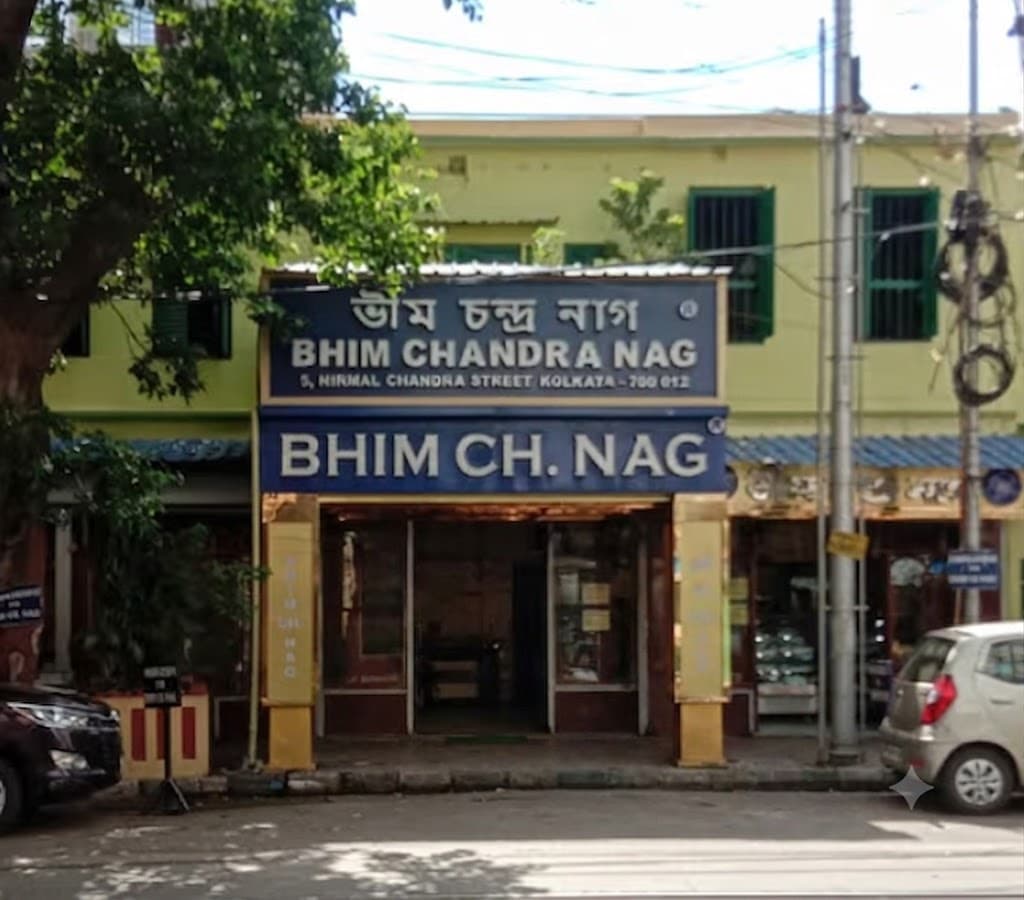
Public histories place the founding in 1826, when Paran Chandra Nag opened the shop in Bowbazar and named it after his son, Bhim Chandra Nag. That family-rooted gesture still gives the brand its intimacy.
Bhim Chandra Nag is not only a place to buy mishti. It is a cultural address: a sandesh house, a Bowbazar memory, and a thread through Bengal's 19th and 20th century stories.
Public histories place the founding in 1826, when Paran Chandra Nag opened the shop in Bowbazar and named it after his son, Bhim Chandra Nag. That family-rooted gesture still gives the brand its intimacy.
Stories around the shop include Ramakrishna Paramhansa, Rani Rashmoni, Sir Ashutosh Mukherjee, Rabindranath Tagore, and Satyajit Ray. The names matter because the sweets sat inside everyday hospitality, worship, debate, cinema, and literature.
The house is widely credited with Ledikeni, linked to Lady Canning, and Ashubhog, named for Sir Ashutosh. The Bowbazar shop is also known for a Cooke & Kelvey clock, often described as a gift from Thomas Cooke after tasting the sweets.
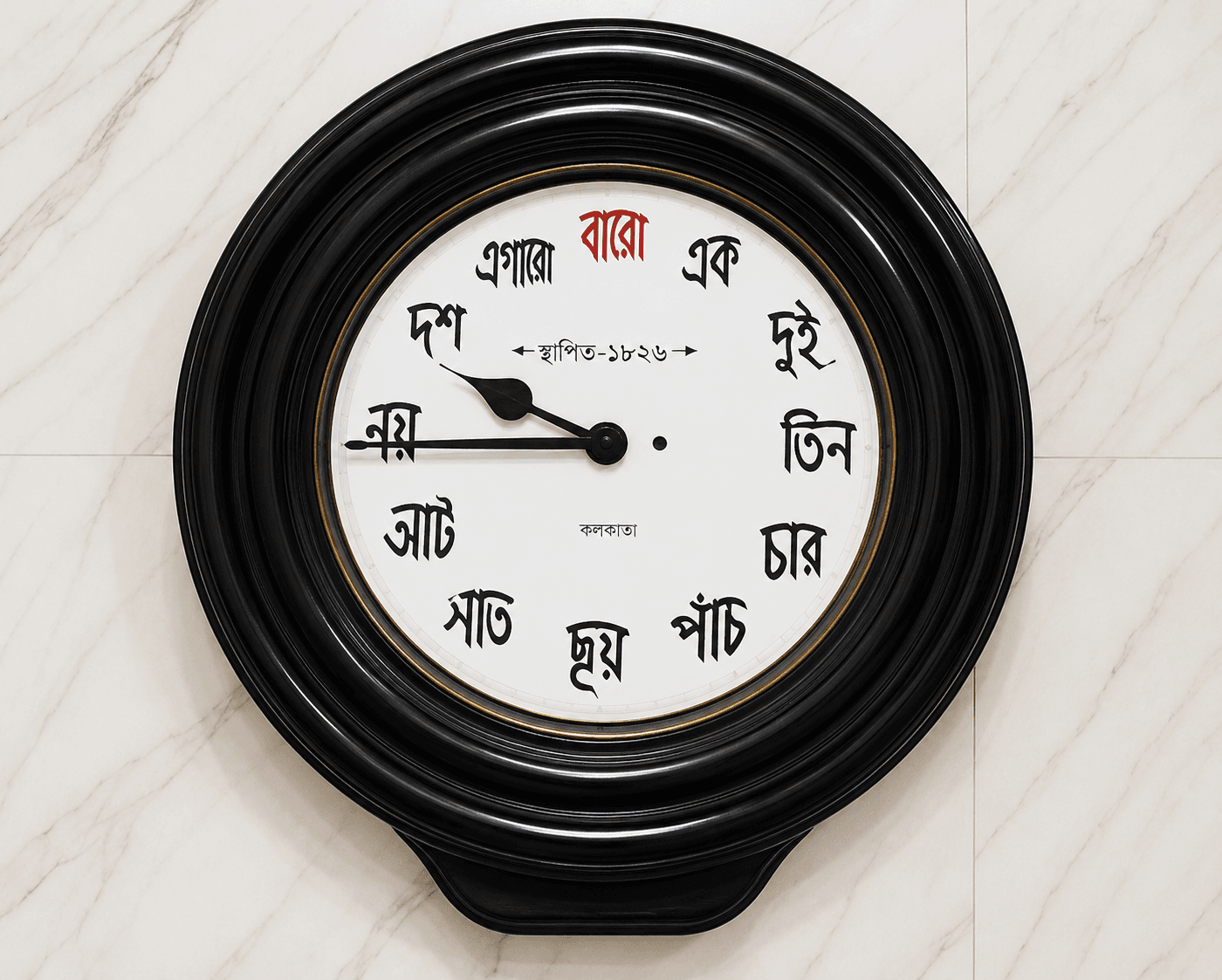
One of the most charming legends attached to Bhim Chandra Nag is not kept inside a box of sandesh, but on the wall. Heritage accounts describe a Cooke & Kelvey clock with Bengali numerals, connected to Thomas Cooke's 1858 visit to Calcutta. After tasting the shop's sweets, the story goes, Cooke offered a clock as a gesture of admiration.
The detail that makes it unforgettable is the dial. The shop's workers read Bengali, so the clock was made with Bengali hour marks instead of Roman or English numerals. That small act turns the clock into more than decor: it is a portrait of old Calcutta commerce, where a world-famous maker met a local mishti house on its own language and rhythm.